

Service

Software Support

L1–L3 application support, maintenance, and incident response with clear SLAs.

Best for
Companies running business-critical applications
Format
Reserved monthly hours up to 24/7 L1–L3 cover
You receive
Monitoring, incident response, patching and health reports
What you are buying

Always-on application care.

We monitor, maintain and improve your live software under clear SLAs, so problems get handled before they become business problems.

Software support is more than fixing bugs. We monitor production, respond to incidents within agreed SLAs, ship hot-fixes, and continuously improve your software with small, frequent releases.

Engagement models range from a few reserved hours per month to fully outsourced 24/7 support with on-call rotations.

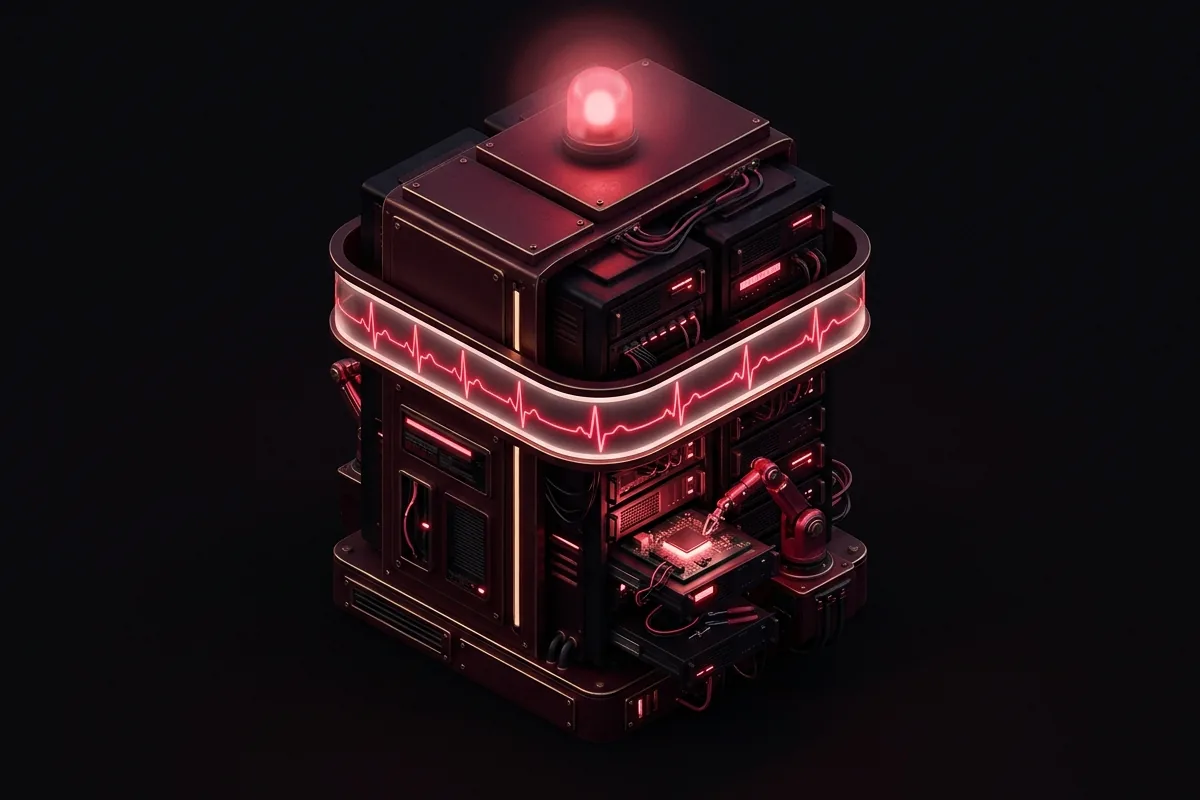
Server control station with a glowing heartbeat line and robotic maintenance arms

The continuous support loop

Each incident makes the system easier to run, rather than simply being closed.

L1–L3 support
01 Detect Monitoring and alerts
02 Triage Severity and owner
03 Resolve Fix within SLA
04 Prevent Root-cause follow-up
Is this for you

Signs you need this

  • The original developers have left or the vendor is gone.
  • Incidents are handled ad hoc with no clear owner.
  • Security patches and dependency updates keep getting postponed.
  • Your product team is pulled away from the roadmap to fix bugs.
What’s covered

Scope of the engagement

  • 01 Application maintenance & bug fixing
  • 02 L1–L3 help desk services
  • 03 Incident response with SLA
  • 04 Performance and security patching
  • 05 Mobile app support & updates
What you get

Tangible deliverables

  • 01

    Agreed SLAs

    Response and resolution targets by severity.

  • 02

    Monitoring and alerts

    Early warning across application and infrastructure.

  • 03

    Maintenance releases

    Fixes, patches and dependency updates shipped regularly.

  • 04

    Quarterly health report

    Trends, risks and recommended improvements.

  • Documented SLAs
  • Always-on monitoring & alerting
  • Quarterly health reports
  • Predictable maintenance cost
How it runs

From first call to result

  1. Step 1

    Take over

    Audit the system and transfer knowledge.

  2. Step 2

    Instrument

    Set up monitoring, alerting and runbooks.

  3. Step 3

    Respond

    Triage and resolve incidents under SLA.

  4. Step 4

    Maintain

    Ship patches and small improvements.

  5. Step 5

    Review

    Report quarterly and reduce repeat issues.

In practice

Problems this service solves

Remote monitoring clinicians can act on

The challenge

Connected devices generate constant readings, but without prioritisation care teams face either alert fatigue or data nobody reviews.

How we solve it

  • Secure device data ingestion and normalisation
  • Configurable thresholds set by clinical teams
  • Prioritised worklist with escalation paths

What your business gets

  • Attention directed to the patients who need it
  • Clinical rules controlled by clinicians
  • A reviewable history of readings and responses

Last-mile delivery that works offline

The challenge

Drivers lose signal on route, paper proofs of delivery go missing, and disputes take days to settle.

How we solve it

  • Offline-first driver app with background sync
  • Photo, signature and geotag proof of delivery
  • Live ETA updates for dispatch and recipients

What your business gets

  • Delivery evidence available right away
  • Fewer calls asking where a parcel is
  • Quicker resolution of delivery disputes

Real-time warehouse visibility

The challenge

Stock counts drift from reality because scanning, picking and ERP updates happen in separate steps and sometimes on paper.

How we solve it

  • Barcode and mobile scanning across warehouse tasks
  • Guided picking and put-away workflows
  • Two-way synchronisation with the ERP

What your business gets

  • Stock records that reflect the warehouse floor
  • Clear, guided work for new staff
  • Earlier sight of bottlenecks
Tools & standards

What we work with

  • Datadog
  • Grafana
  • Sentry
  • PagerDuty
  • Opsgenie
  • Jira Service Management
  • Zendesk
  • ELK
Questions

Before you decide

  • Can you support software you did not build?

    Yes. We start with a technical audit and knowledge transfer before taking responsibility.

  • What support levels do you offer?

    L1 to L3, from user-facing help to deep engineering fixes, based on what you need.

  • Is 24/7 cover required?

    No. Plans range from reserved monthly hours to fully outsourced round-the-clock support.

Related

Often paired with

Next step

Ready to start with software support?

A 30-minute discovery call is enough to scope a meaningful first phase.

We use cookies to improve your experience and analyse site usage. Cookie Policy